
Combination approaches are one of the fastest-moving themes in metabolic peptide research, and CagriSema has become a leading example of the strategy. It pairs the long-acting amylin analog cagrilintide with the GLP-1 agonist semaglutide, two molecules that influence appetite and energy balance through different biological routes. The appeal of putting them together is not simply additive strength; it is the chance to study how two complementary pathways behave when engaged at the same time. For a research team, a fixed pairing like this is a cleaner instrument than two separate injections, because it removes much of the timing and dosing variability that muddies interpretation. That controlled quality is what has moved combination work from a curiosity to a serious line of investigation. It reflects a broader shift in the field away from single targets and toward systems. The rationale rests on the distinct mechanisms of the two components. Amylin, the hormone that cagrilintide mimics, slows gastric emptying and contributes to satiety signalling through the hindbrain, shaping how full an organism feels and for how long. GLP-1, the target of semaglutide, works through the incretin system, promoting glucose-dependent insulin release and its own set of appetite signals. Because these pathways are complementary rather than redundant, combining them lets researchers ask whether the pair produces effects that neither molecule achieves on its own. That question sits at the heart of combination pharmacology, and it is far easier to pose than to answer cleanly. The interest in CagriSema is precisely that it offers a controlled way to begin answering it. What researchers are actually examining tends to be more granular than the headline idea of combining two drugs. A central question is whether the observed effects on appetite signalling are merely additive, where the two contributions sum, or genuinely synergistic, where the whole exceeds the parts. Closely related is the matter of dosing ratio, since the balance between the amylin analog and the GLP-1 agonist may change the character of the response, not just its magnitude. Timing and sequencing of exposure are also under study in preclinical models, because when each component acts relative to the other could matter. These are demanding experiments to design, and they depend on careful controls and reliable material. The work is slow by nature, but it is the kind of slow work that produces durable understanding rather than fragile claims. There is a reason combination research is attracting so much attention beyond any single compound. Single-target molecules eventually reach a ceiling in what one pathway can explain, and fixed-ratio combinations offer a controlled route past that limit. They let teams study pathway interaction in a way that two separate injections cannot, because separate injections introduce their own timing and variability confounds that are hard to disentangle. That said, several practical questions remain genuinely open, including the optimal dosing ratio and the best administration schedule, and comparative work against triple agonists is a natural next step. For laboratory use, the discipline is the same as with any combination: document each component’s lot and purity independently, so that if a result is surprising you can trace it to biology rather than to the material. Handled that way, CagriSema is a useful window into how complementary metabolic pathways cooperate.

BPC-157 remains one of the most studied regenerative peptides, and questions about how to handle it correctly come up more often than questions about what it does. That is not surprising, because the value of any research result depends on the material behind it staying intact from the moment it arrives to the moment it is used. Peptide integrity after reconstitution turns out to depend on a small number of controllable variables, and recent stability work largely reinforces what disciplined researchers already practice. The compound is forgiving in its dried form and considerably less forgiving once it is in solution. Understanding that transition is the key to using it well. What follows is a practical synthesis rather than a novel claim, because in handling peptides the fundamentals matter far more than any clever trick. In its lyophilized, or freeze-dried, form, BPC-157 is relatively stable when three conditions are met, and those conditions are cold, dry, and sealed. Long-term storage at minus twenty degrees Celsius or colder is the standard, and vials should stay sealed until they are actually needed. A useful detail that is easy to overlook is temperature equilibration: allowing a cold vial to reach room temperature before opening prevents condensation from drawing atmospheric moisture into the powder. Moisture is the quiet enemy of a lyophilized peptide, because it undermines the very dryness that keeps the material stable. Handled this way, the dried powder can remain usable for extended periods without meaningful loss. The clock that really matters only starts once the powder goes into solution. Once reconstituted, BPC-157 becomes far more sensitive to time, temperature, and handling, and here the choices a researcher makes have direct consequences. Bacteriostatic water is the conventional diluent because the small amount of benzyl alcohol it contains limits microbial growth over repeated access to the same vial. Refrigerating the working solution rather than leaving it at room temperature slows degradation, and minimizing freeze-thaw cycles matters because each cycle mechanically stresses the molecule. For samples that will sit unused for long stretches, aliquoting before freezing is the sensible approach, since it means only a small portion is thawed and refrozen at any time rather than the entire batch. Light exposure and simple elapsed time also erode integrity, so solutions should not be left out or kept indefinitely. None of these steps is difficult, but skipping them turns storage error into experimental noise that is easy to misread as a real effect. The final piece is documentation, which ties handling discipline back to reproducible results. Every reconstituted vial should be labelled with its reconstitution date and its concentration, because those two facts let you rule out material age as a variable when data starts to drift. Getting the concentration right the first time also avoids waste and re-work, which is where planning tools earn their place. Our reconstitution calculator returns exact volumes for a given vial size and target concentration, so the math is settled before the diluent is drawn. That precision keeps records clean and reduces the amount of handling the material undergoes, which is itself a stability benefit. Taken together, careful storage, sensible diluent choice, restrained freeze-thaw, and honest labelling remove an entire class of confounds before an experiment even begins. With BPC-157, as with most research peptides, the unglamorous fundamentals are what protect the science.

Reproducibility in peptide research begins with a deceptively simple question: what is actually in the vial? For years the honest answer depended on documentation that was available but not always immediate, and that gap introduced uncertainty into otherwise careful work. We have now closed that gap by rolling out batch-level Certificate of Analysis access across the entire catalog. Every vial is tied to the exact lot it came from, and the matching analytical paperwork is one click away from the product page. There is nothing to email, request, or wait for, which means the information arrives at the moment a researcher is deciding whether to trust a compound. This change is small in engineering terms but significant in what it does for confidence at the bench. A Certificate of Analysis is only useful if you understand what it contains and why each element is there. Each COA includes an HPLC purity trace, which shows the main peptide peak alongside any detectable impurities and expresses purity as a percentage of total area. It also includes a mass-spectrometry result, which confirms the compound’s identity by matching its measured molecular weight against the theoretical value calculated from its sequence. Finally, it carries the lot number, the thread that ties the document to the physical material in your hand. Read together, these three items answer the two questions that matter most, namely whether the compound is what it claims to be and how pure it is. Neither question can be answered by a product description alone, which is exactly why the underlying data now travels with the material. The reason both tests appear together deserves emphasis, because it is a frequent source of confusion. HPLC tells you how pure a sample is, but it cannot tell you the identity of the main peak on its own. Mass spectrometry confirms identity, but on its own it does not tell you how much of the sample is that molecule versus impurities. A sample could be ninety-nine percent pure and still be the wrong compound, or it could be the correct compound at disappointing purity, and only the combination of the two techniques rules out both failure modes. Tying that combined result to a specific lot adds a further layer of assurance, because it means your records reference the actual batch on your bench rather than a generic specification. This is what turns a certificate from marketing into genuine quality assurance. Making good use of the change is mostly a matter of habit. When you log a new compound, record its lot number and either attach or reference the corresponding COA in your notes, so the trail is preserved from the day the vial arrives. If you run comparative work across multiple orders of the same peptide, the lot-level documentation lets you quickly rule out material variability whenever results drift unexpectedly. That single step often saves hours, because material differences are one of the first confounds a careful researcher should eliminate. Over time, a lab that consistently ties data to lots builds a far more defensible body of work than one that treats every vial as interchangeable. The transparency is now built in; the value comes from using it consistently.
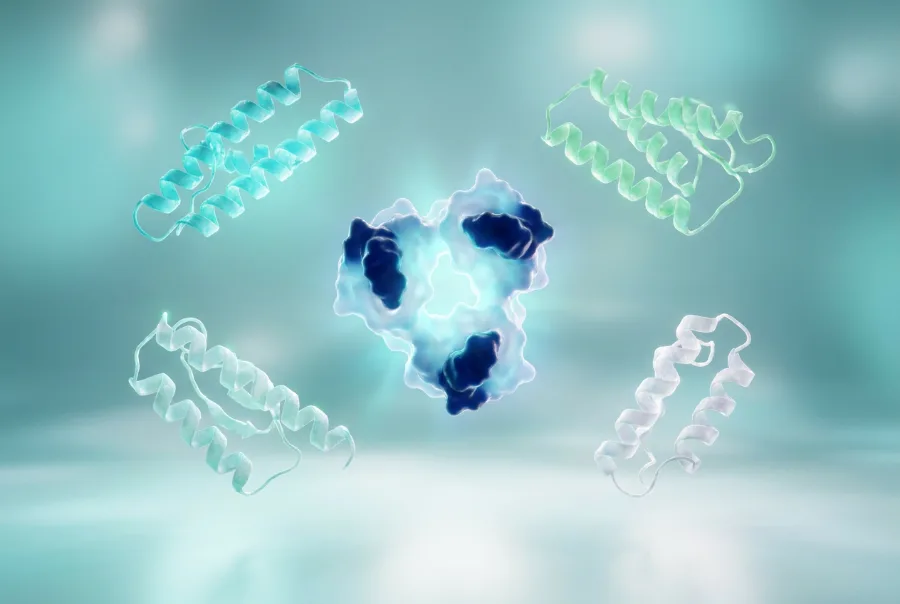
Retatrutide has quickly become one of the most closely watched compounds in metabolic research, and the reason comes down to its unusual mechanism. Where earlier tools engaged a single incretin receptor, and the more recent generation engaged two, retatrutide activates three at once. It targets the GLP-1, GIP, and glucagon receptors together, which means a single molecule now touches several interlocking arms of energy regulation. For laboratories, that consolidation is valuable in its own right, because it removes the timing and variability problems that come from dosing two or three separate compounds. It also lets researchers study pathway interaction directly rather than inferring it from separate experiments. The result is that a compound once thought of as simply a stronger agonist is now treated as a platform for studying metabolism as a system. Understanding why three receptors matter requires looking at what each contributes on its own. GLP-1 is the most familiar of the three, responsible for glucose-dependent insulin secretion and for much of the appetite and satiety signalling that has defined the incretin field. GIP adds a second layer, influencing insulin sensitivity and the way tissues handle fat, and its role has been debated and refined for years. Glucagon is the most distinctive addition, because rather than only affecting glucose storage it drives energy expenditure, shifting the balance toward how much energy the body burns. When these three signals are combined in one molecule, researchers can begin to separate additive effects, where the outcomes simply stack, from synergistic effects, where the combination produces something none of the receptors achieves alone. That distinction is difficult to study any other way, and it is precisely what makes retatrutide interesting as a research object. The newest preclinical datasets have concentrated on building reliable reference profiles rather than chasing dramatic results. Much of the recent characterization work focuses on dose-response behaviour across all three receptors, which gives laboratories clean baselines against which to compare their own protocols. A second focus has been receptor selectivity, since knowing how strongly the compound binds each target is essential to interpreting any downstream metabolic signal correctly. Together these efforts produce a more trustworthy foundation, which matters because comparative studies are only as good as the baselines they rest on. Researchers are also increasingly running retatrutide side by side with dual agonists such as tirzepatide, using the comparison to isolate what the third receptor actually adds. This kind of methodical groundwork rarely makes headlines, but it is what allows later, more ambitious experiments to be trusted. The current phase of retatrutide research is best understood as this careful mapping of the territory. None of this changes the fundamental context in which the compound should be handled. Retatrutide is a research compound, and everything described here refers to laboratory and preclinical investigation rather than any form of clinical guidance. The practical implications for a working lab are straightforward but important: source material that has been third-party tested, confirm both identity and purity before beginning, and document lot information alongside your results. Because the compound engages multiple pathways, small differences in material quality can propagate into confusing downstream data, so the discipline of verification pays off more here than with simpler molecules. Keeping careful records of concentration, lot, and storage conditions lets you rule out material variability as a source of noise before interpreting anything. Treated with that rigor, retatrutide is a powerful probe into how the body’s energy systems talk to one another.
Welcome to WordPress. This is your first post. Edit or delete it, then start writing!
